

Bureau of Reclamation
Fiscal expert Roy Bahl once told Congress, “There has always been a federal urban policy. Unfortunately, no one has ever known what it was.” That’s in part because of confusion over what “urban” policy means and in part because of the lack of consensus — particularly since the tumult of the 1960s — over what that policy should be.
Urban policies are the rules and incentives that shape the prosperity, equity, and environmental sustainability of the metropolitan regions in which 8 in 10 people live. Urban policy ought to focus on coordination of human and capital resources of the public, private, and nonprofit sectors to address local concerns and problems, response to positive as well as negative spillover effects of individual and collective actions, and investment in the assets — transportation, energy, water, waste, cultural institutions, and other infrastructure — that make places successful. Rural areas likewise need place policies that address these issues — but on their own terms.
Urban policy is distinct from the much bigger category of domestic policies that affect the lives of individuals in urbanized areas. The boundary is fuzzy sometimes, but the distinction matters. For example, recently revamped FHA mortgage insurance, which makes stable housing finance available to millions of homebuyers, is not an “urban” policy. Most federal transportation policy is urban policy — and hugely important for the healthy development of metro regions.
As president, you should make job creation, infrastructure, environmental sustainability, crime, and housing the centerpieces of your urban policy. A series of savvy, fiscally responsible, yet bold initiatives in these areas could make a big difference on the ground and broaden the constituency for further change.
The jobs strategy would address our economy’s ongoing failure to produce enough jobs paying a “living” or family-supporting wage. Work supports, such as childcare and health insurance, and wage supplements (most important, an expanded Earned Income Tax Credit) are essential for raising incomes and improving the quality of life on the bottom and at the middle of our society, which is now more unequal than at any time since the 1920s. These are not urban policies, though they matter enormously to cities, as well as suburbs, where poverty has grown rapidly.
One of our most stubborn economic problems is that we have yet to replace disappearing high-wage industrial jobs with any meaningful equivalent that most Americans can attain. And the orthodoxy of the past two decades — that every region should reinvent itself as a high-technology “knowledge” economy — is, for many reasons, myopic as well as unrealistic.
We need a ground game, centered on regional job-creation partnerships, for creating a clean-energy economy. The most promising target? Creating millions of jobs in the skilled trades through savvy finance of energy-efficiency upgrades and home retrofitting, plus smart investments in infrastructure.
This is urban policy because it cannot be airmailed from Washington via one-size-fits-all blueprints. It requires local adaptability as well as public/private coordination, operating under clear standards and oversight. Excellent tools — which have leveraged modest federal dollars with massive amounts of private capital, and have a track record of hard-won lessons — already exist in HUD’s economic development grant and loan programs aimed at states and localities. Plus, there is the patchwork of programs — which can and should be rationalized — at the Economic Development Administration, Labor (where we need a Workforce Investment Act 2.0), and other agencies.
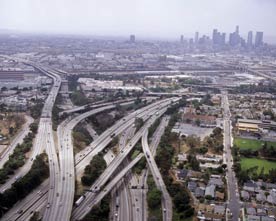
Beyond its role in a jobs strategy, smart infrastructure investment has huge implications for metro regions’ ability to compete globally while becoming environmentally sustainable.

The federal government should reward regions that take a fix-it-first approach rather than heavily subsidizing sprawling growth, and that agree to performance-based allocations of transportation and other infrastructure dollars. Launch a pilot program that builds on the best regional-planning incentives and regional councils to help federal agencies coordinate locally (both were de-funded in the 1980s).
By repartnering with the federal government, we could charge America’s regions to strategize transportation, land use, and economic development together. To do this, you would need a White House council that coordinates implementation, not just urban policy development, across the agencies. There has never been one.
Next, there’s environmental sustainability. A consortium of federal agencies should be charged to sort through the myths and realties and still-unknowns about how to significantly reduce local carbon footprint — instead of just “green-washing” communities through ad-hoc reforms.
Meanwhile, we can’t wait to do the obvious: Triggering energy-efficiency upgrades is smart and very labor-intensive. So is distributed power generation, with solar panels, solar water heaters, and other energy infrastructure financed, installed, and maintained on millions of homes and commercial buildings by utilities, not the consumer. The president should work with Congress to create federal renewable-energy standards.
Urban regions are ground zero for meeting the climate challenge, and doing so could be a boon to civic engagement and the extension of prosperity broadly — through job, wealth, and skill creation.
But crime, and particularly the violent crime that remains heavily concentrated in many urban neighborhoods, undercuts investment, reproduces racial and economic segregation, and does more to fuel race and class stereotypes and undermine the quality of life of poor people of color than any other public issue. Crime policy is all about spillovers, and it’s one domain where a very targeted approach makes sense. Shift federal resources from the many unproductive aspects of the war on drugs to smart investments in prevention (especially positive youth development) together with successful deterrence, policing, and prisoner re-entry efforts. Learn from the best local efforts and make challenge grants available to state and local governments willing to pursue real reform.
Finally, revitalized national housing policy would provide a crucial, pro-work complement to these other urban policies. First, focus on solving the crisis-level shortage of affordable rentals, especially in the hot metro economies where wages for low- and moderate-income workers fall far short of housing costs, as part of a larger opportunity agenda for the poor and middle class.
The recently enacted national housing trust fund is a long-awaited step in the right direction. But we need to significantly expand the supply of rental vouchers for very low-income households, continue redeveloping distressed public housing (with much stronger protections against displacement and poor property management), and give production and preservation incentives to regions willing to target affordable rental housing toward job growth zones.
The next White House and Congress can move urban policy out of the impasse created by an entrenched, zero-sum contest over aid to address central-city distress. It’s time to put the broader view — the sustainability and jobs imperatives, the interdependence of cities and suburbs — front and center.
About the Author




Comments